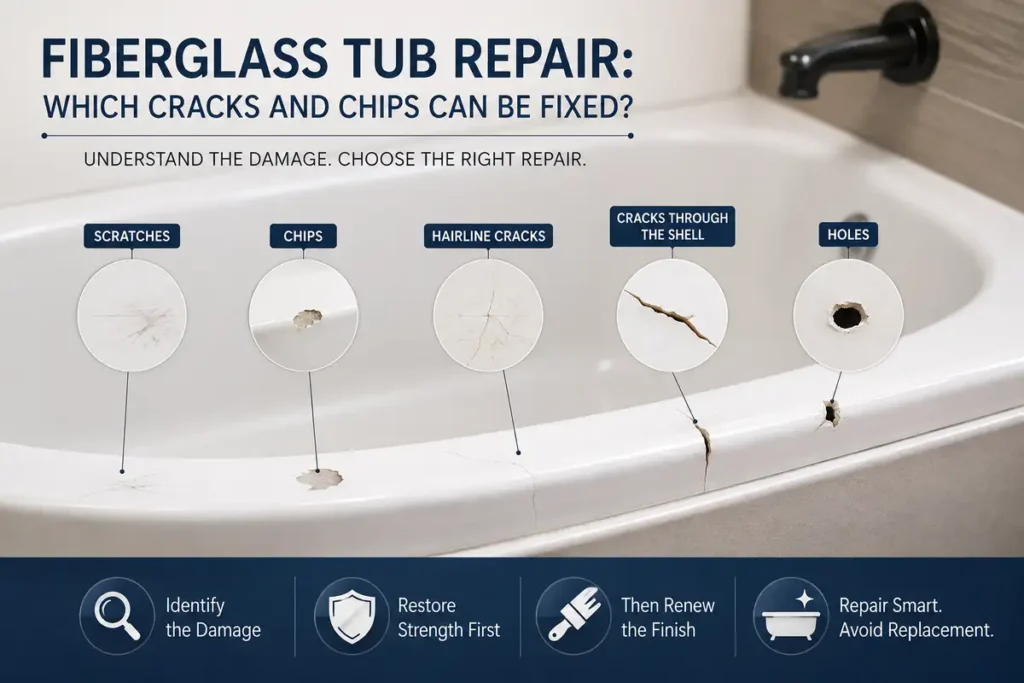
A small chip can look worse than a hairline crack—and still be the easier repair. The chip may affect only the tub’s finish. That thin crack could reach the reinforced body underneath, especially if the floor moves during normal use.
Many fiberglass tub chips, scratches and surface cracks can be repaired without replacing the fixture. Deeper cracks and holes may also be repairable, but restoring strength comes before restoring the finish. The real question is what has failed: the surface, the structure, or both.
Here is how to make sense of the damage before choosing a repair kit, refinishing service or replacement tub.
Which types of fiberglass tub damage can be repaired?
Most gelcoat fiberglass tubs have a smooth outer finish over a reinforced composite body. Damage to those layers calls for different work. Also, some acrylic tubs have fiberglass backing; that does not make their visible acrylic surface gelcoat. A model number is more useful than guessing from how the tub sounds when tapped.
| Damage you can see | What a suitable repair needs to accomplish |
|---|---|
| Shallow scratch or scuff | Improve the finish without unnecessarily removing sound material |
| Chip or surface gouge | Rebuild the missing profile and restore a compatible finish |
| Fine crack or spiderweb pattern | Establish its depth and cause before repairing the affected material |
| Crack through the shell or a puncture | Restore the damaged structure as well as the visible surface |
| Reopened patch or cracking around a moving floor | Resolve the reason for failure before repairing again |
Chips and gouges in the finish
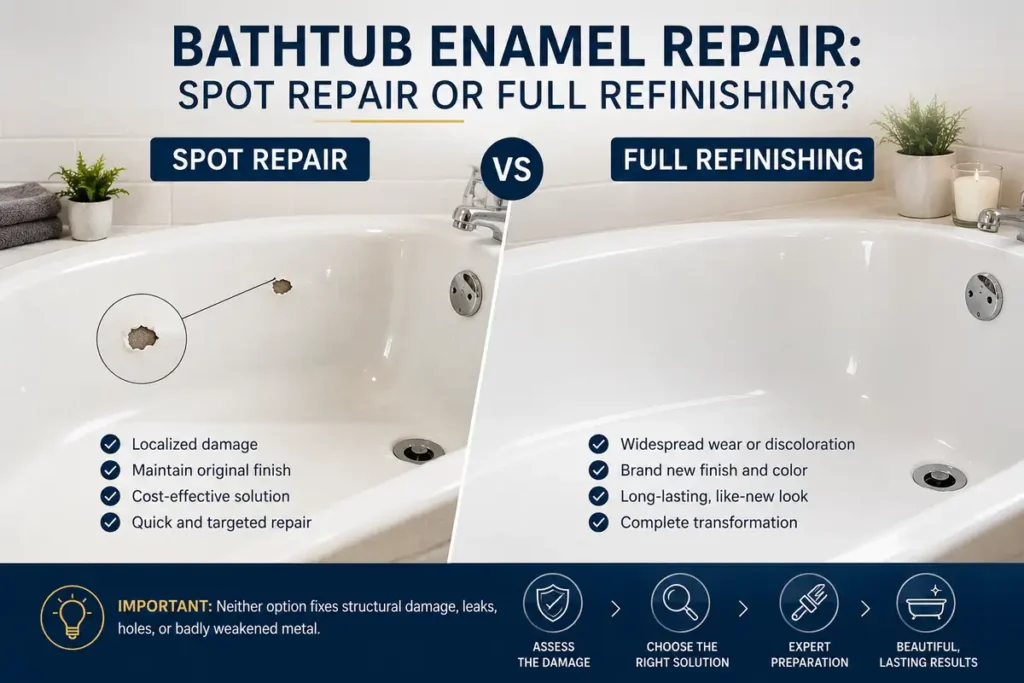
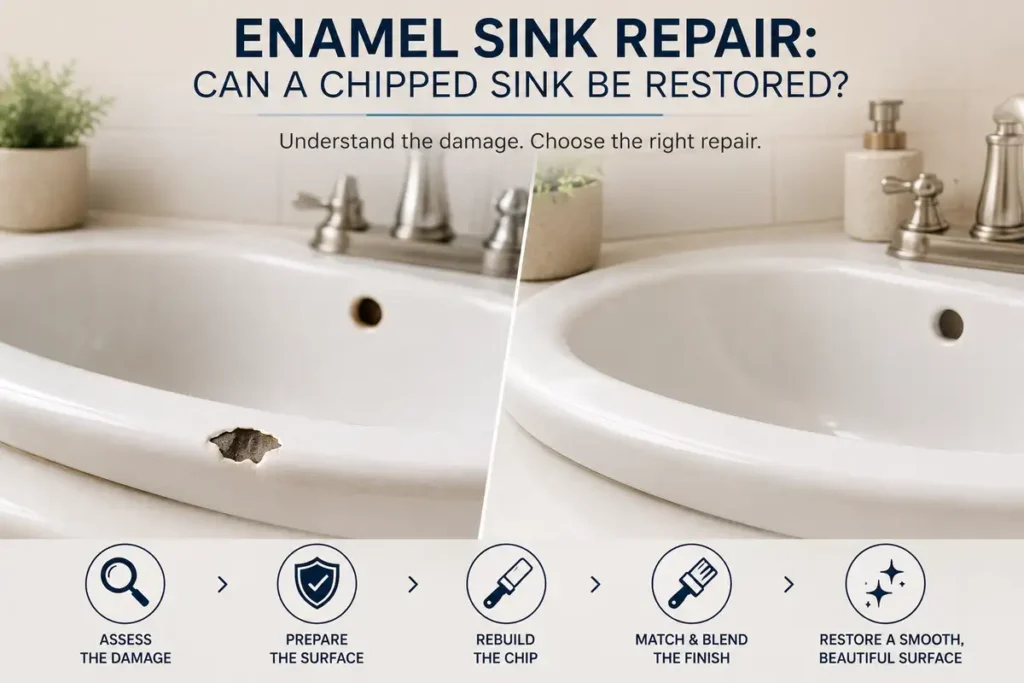
An isolated chip from a dropped object is often a good repair candidate when the surrounding material remains firm and intact. The missing area can be filled, shaped and finished to blend with the tub.
Depth matters more than the dark outline you see. A shallow divot needs different treatment from an impact that has broken through the shell. Painting over either one changes its color; it does not necessarily rebuild what is missing.
Multi-Tech Products identifies chips, gouges and surface cracks among the defects its gelcoat cosmetic repair system addresses. The word surface matters here: that process is not a substitute for structural reinforcement.
Hairline cracks and spiderweb marks
A hairline crack describes appearance, not depth. A cluster of fine lines might be confined to the gelcoat, but a similar-looking mark can accompany movement or damage beneath it.
Useful clues include how the damage started, whether the lines are spreading and whether an earlier patch failed in the same place. These clues help narrow the problem; they do not prove that a crack is cosmetic. A photograph alone cannot reliably settle that question.
Holes and cracks through the tub body
A hole does not automatically make a fiberglass tub beyond repair. Composite repair can rebuild a localized damaged section when the surrounding material and installation are suitable.
However, a hole is a different job from touching up a chip. It may require reinforcement and a larger working area than the visible defect suggests. If the tub leaks, has an open break or feels unstable, stop using it until it has been inspected.
Why does the same crack keep coming back?
Think of a patch across a joint that keeps moving. Making the patch look smooth does not remove the movement.
Repeated cracking can reflect unresolved support problems, damage extending beyond the first repair, poor bonding or an unsuitable repair material. Another layer over the same area may hide the line briefly while leaving the cause untouched.
Multi-Tech’s structural repair guidance separates the decorative surface from the reinforcement that provides mechanical strength. When the reinforced body is damaged, the repair needs adequate support and rigidity before the finish is renewed.
This is why a repair area can be wider than the crack itself. The new work needs to connect to sound surrounding material. A larger prepared area is not, by itself, evidence that the technician has made the problem worse.
What does professional fiberglass tub repair involve?
The exact system depends on the fixture, but the work should have a clear sequence.
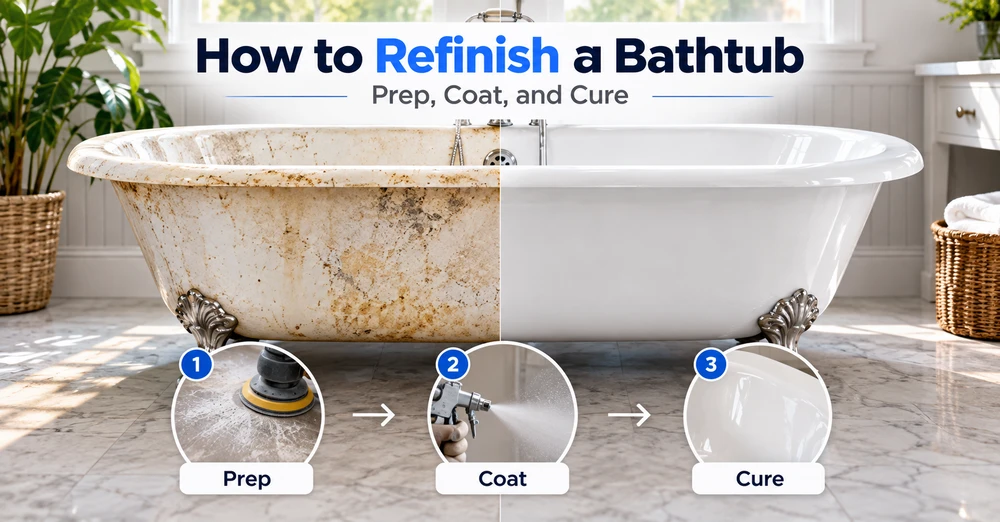
First, establish the extent of the damage. The repairer identifies the surface material, examines the affected area and considers any movement, leakage or previous repair. This decides whether the job is cosmetic or structural.
Next, prepare a sound repair area. Contamination and damaged or poorly attached material can interfere with bonding. Preparation creates a suitable base rather than trapping a problem beneath new filler.
Rebuild what the damage removed. A shallow chip may need a compatible filler. A fractured shell may need fiberglass reinforcement and resin before the surface can be restored. The support arrangement also needs attention if it contributed to the failure.
Finally, shape and finish the surface. The repaired area is brought back to the surrounding contour, then finished with a system appropriate to the tub. Color, gloss and texture all affect the result.
Access can change how this is done. In Epoxyworks’ fiberglass tub repair article, Tom Pawlak distinguishes repairs with access behind the fixture from work carried out from the finished side. Backside access can reduce the cosmetic work; lack of access does not automatically rule out repair. That is a design decision for the particular job, not a reason to open your bathroom walls yourself.
Can a DIY fiberglass tub repair kit do the job?
For a clearly identified, limited surface defect, a kit specifically approved for that fixture and damage may be reasonable. It becomes a poor bet when the floor moves, the crack leaks, the material is uncertain or a previous repair has reopened.
Read what the kit actually contains and repairs. A surface filler, a reinforcement kit and a refinishing coating perform different jobs, even when their packaging uses similar language.
Also avoid assuming that every automotive or marine product is suitable for a bathtub. Multi-Tech warns that ordinary automotive body fillers can perform poorly in wet bath repairs. The required compatibility is with the whole repair system and its use, not simply with the word “fiberglass.”
Follow the product label for preparation, protective equipment, ventilation and curing. Do not combine a resin from one tutorial with a mixing ratio or solvent recommendation from another.
Will the repaired area match the rest of the tub?
A repair has three visible qualities: color, sheen and shape. Matching only the color can still leave a glossy island, a dull halo or a raised edge.
Older white and almond finishes are particularly useful examples. A new material labeled “white” may look noticeably different beside the existing tub. A textured floor adds another challenge because a smooth patch can interrupt the pattern.
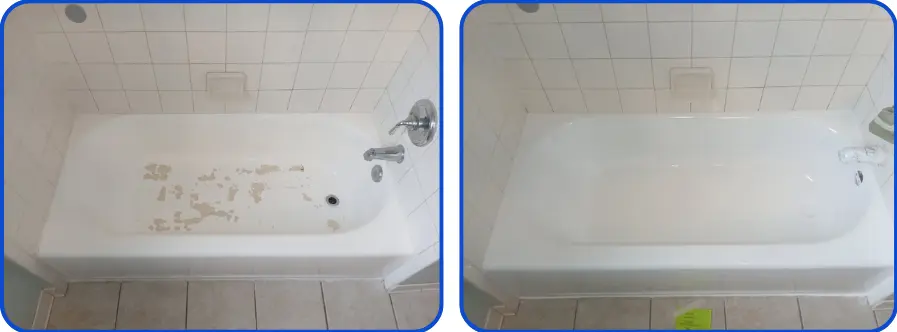
Localized blending can work well, but an invisible result should not be promised without seeing the fixture. If the entire tub is dull, stained or uneven from earlier work, repairing the damage and then refinishing the wider surface may give a more consistent appearance.
When is replacement the better choice?
Replacement deserves serious consideration when deterioration is extensive, several damaged areas suggest a broader structural problem, or the installation cannot be made reliably sound within a sensible repair scope.
It may also suit a planned bathroom remodel. If you already intend to change the tub’s size, shape or layout, restoring the existing surface does not achieve that goal.
For an otherwise useful tub with one repairable defect, compare the complete jobs. Replacement can include removal, plumbing and repairs to the surrounding bathroom. A structural repair can include access and reinforcement. Neither should be compared using only the price of the visible patch or the new fixture.
There is no universal crack length or birthday that makes every fiberglass tub worth replacing.
Before booking a repair
Send a close photograph of the defect and a wider photograph showing its position. Include any model information, previous refinishing history and observations about movement or leakage. Do not deliberately load or fill a damaged tub to gather evidence.
The proposal should identify the damaged area, any structural work, the finish coverage and when the tub can get wet again. Those details make two estimates meaningfully comparable.
Fiberglass tub repair FAQs
Can refinishing alone fix a crack?
Refinishing renews the surface. It does not supply missing reinforcement or correct an unstable installation. Necessary crack repair must come first.
Can a repaired bathtub still have a textured floor?
Texture needs to be part of the finish plan. Discuss how the repaired area will meet the surrounding standing surface; do not assume a smooth patch reproduces the original texture.
How long should a fiberglass repair last?
That depends on the original damage, preparation, materials, support and use. A promised number of years means little if the cause of the crack remains unresolved. Review the repair’s actual warranty and care instructions.
Have a damaged fiberglass tub in Jacksonville?
Bath Tub Man’s bathtub refinishing service covers cosmetic restoration of fiberglass and other tub surfaces in Jacksonville and Northeast Florida. Request a quote or call 904-744-3999. Describe any cracking, movement or leaking at the outset so the discussion can establish whether surface restoration is appropriate or further structural assessment is needed.